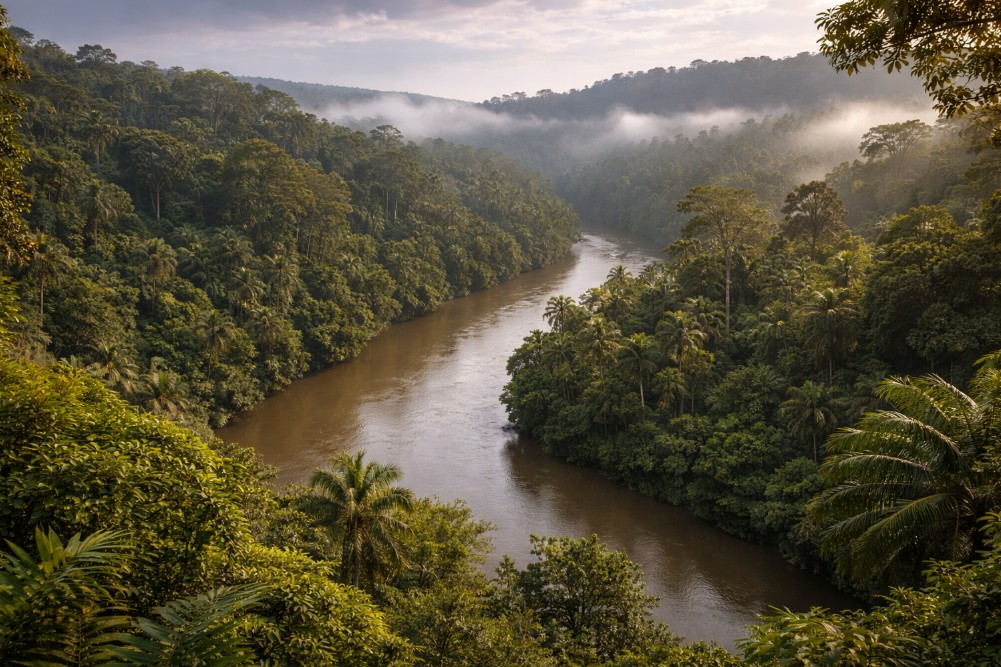
The Peruvian Amazon covers more than 60 percent of the country’s total land area. It contains some of the most biodiverse ecosystems on earth, a distinct and extraordinary food culture, and communities with deep knowledge of the forest that surrounds them. This Peruvian Amazon travel guide covers the three main access points, what to expect from each, what to eat, and how to plan a jungle visit well.
The Sounds of the Amazon 🌿
Personal footage from my trip © Sofia, Discover Peru.
1. Why the Peruvian Amazon specifically
The Amazon basin extends across nine countries, but Peru’s portion is considered among the most biodiverse anywhere in the system. Two protected areas in particular — Manu National Park and the Tambopata National Reserve — contain extraordinary concentrations of wildlife and are accessible to visitors with varying budgets and time constraints.
The difference between traveling the Peruvian Amazon and traveling other parts of the Amazon basin is largely one of access and infrastructure. Peru has developed a lodge-based tourism model over several decades that allows visitors to experience primary rainforest with knowledgeable local guides, without the logistical complexity of more remote areas. The wildlife is genuine, the forest is primary, and the food — if you choose your lodge well — reflects the real culinary traditions of the region.

2.The three main access points
Tambopata — Puerto Maldonado
Tambopata is the most accessible part of the Peruvian Amazon and the right starting point for most first-time visitors. Puerto Maldonado has its own airport with regular flights from Cusco (approximately 30 minutes) and Lima (approximately two hours), which makes it easy to add to a highland itinerary without losing significant time.
The Tambopata National Reserve protects approximately 275,000 hectares of primary rainforest in the Madre de Dios region. Wildlife in the reserve includes giant river otters, black caimans, tapirs, capybaras, and over 600 bird species. The Colpa de Guacamayos — a clay lick where hundreds of macaws and parrots gather each morning to consume mineral-rich clay — is one of the most remarkable natural spectacles in South America and is accessible from most Tambopata lodges.
Accommodation ranges from simple and affordable to genuinely comfortable, and most lodges include all meals, guided activities, and river transport in their rates.
Manu National Park
Manu is more remote, more expensive, and considerably more demanding to access than Tambopata — and for travelers who want the deepest possible experience of the Amazon, it is worth the effort.
The park covers approximately 1.7 million hectares across the Cusco and Madre de Dios regions, making it one of the largest national parks in South America. Access typically involves a two-day journey from Cusco — descending through cloud forest and montane jungle before reaching the lowland rainforest — which is itself an extraordinary part of the experience. The transition from Andean highland to tropical lowland over the course of a single day is unlike anything else in a Peru trip.
Manu requires visiting with a licensed operator and guide. Independent access to the core protected zone is not permitted.
Iquitos
Iquitos operates differently from both Tambopata and Manu. It is the largest city in the world that cannot be reached by road — access is by air only, or by river from Brazil or Colombia, which takes several days. It sits in the Loreto region of northern Peru, on the banks of the Amazon river itself.
The Amazon experience in Iquitos is more urban and more complex than the lodge-based model of Tambopata. The city has its own distinct character, is still visible in the tiled façades of buildings along the waterfront. River journeys from Iquitos into the surrounding jungle are the primary way of accessing wildlife and indigenous communities in the region.
Iquitos is the right choice for travelers who want a longer, more immersive Amazon experience and are comfortable with a less structured itinerary.

3. What the jungle puts on your plate
Amazonian food is the least internationally known of Peru’s three culinary traditions and arguably the most distinctive. It is built around the river, the forest, and a set of ingredients that exist nowhere else.
Tacacho con cecina is the dish most associated with the Peruvian Amazon — roasted plantain mashed and formed into balls, served with smoked dried pork. It is heavy, smoky, and satisfying in the way that food cooked over wood always is. In Iquitos and Puerto Maldonado it is typically eaten for breakfast or lunch.
Paiche is one of the largest freshwater fish in the world, native to the Amazon basin. White, firm flesh with a mild flavour that holds up beautifully to grilling and smoking. Eating it simply prepared, close to the river it came from, is an experience you will not forget.
Juane is rice cooked with spiced chicken, olives, and egg — wrapped in bijao leaves and boiled. Traditionally prepared for the festival of San Juan in June but found year-round in Amazonian restaurants. The bijao leaf gives the rice a faint, clean flavour that exists nowhere outside the jungle. Worth ordering wherever you see it.
Amazonian fruits worth knowing:
🫐 Camu camu — intensely tart, contains up to 60 times more Vitamin C than an orange
🌴 Aguaje — grows on the moriche palm, rich and oily, with a carrot-like flavour. Best as juice or ice cream
🍋 Cocona — tangy and citrus-adjacent, eaten raw with salt or made into juice. Sometimes used in ceviche
The jungle kitchen is unlike anything else in Peru. → Explore the full story of Peruvian food

4. Wildlife — what you can realistically expect to see
The Amazon is different than a safari in the sense that wildlife is not always visible or predictable. What you can reliably expect from a well-run lodge in Tambopata or Manu is: exceptional birdlife (the species count in both areas is among the highest anywhere on earth), river wildlife including caimans and river turtles, and the macaw clay lick experience if you are staying near Tambopata.
Mammals are harder to see reliably. River otters are possible — particularly from boats on the river early in the morning — and some lodges have specific otters they track regularly. Tapirs, peccaries, and monkeys are possible on forest walks. Jaguars are present in both Tambopata and Manu but are genuinely rare sightings.

5. How to plan your Amazon visit well
Stay in a lodge, not a hotel in town. The lodge model exists for good reason — it places you inside or directly adjacent to primary forest, with guides who know the specific area and can find wildlife efficiently. Quality varies significantly between lodges. When choosing, look for lodges that employ local guides, work with nearby communities, and have specific conservation commitments.
Plan for at least three nights. Two nights is not enough to settle into the rhythm of the forest. The Amazon operates on a different pace from the rest of a Peru itinerary, and most travelers find that the experience changes significantly after the first 24 hours once the sounds and scale become familiar.
Dry season versus wet season. The dry season (May to October) makes forest walks easier — the ground is firmer and trails more accessible. The wet season (November to April) raises river levels and opens access to areas unreachable in the dry season, and the forest is more intensely green. Both seasons offer good wildlife. The dry season is generally more comfortable for first-time visitors.
Combine Tambopata with Cusco. The most practical Amazon addition for a highland itinerary is a three or four night stay in Tambopata, accessed by the short flight from Cusco. It adds relatively little time and significantly broadens the range of what your Peru trip contains.
Keep Exploring
The Amazon is the part of Peru that most rewards patience and attention. It does not announce itself the way a mountain or an ancient city does — it reveals itself slowly, over days, to people who slow down enough to notice it. Beyond the Amazon, the Andes and the Coast reveal other sides of the country, each with its own landscapes and experiences.
Have you been to the Peruvian Amazon or is it on your list? Leave a comment
8 responses to “The Amazon Side of Peru: What You Need to Know Before You Go”
-
Súper intéressant. Ça nous fait rêver, on imagine et on vit l’expérience rien qu’en lisant cet article, j’aimerais savoir si vous avez des endroits précis à nous conseiller!
-
Merci beaucoup, ça me fait très plaisir 😊
Si c’est votre première fois en Amazonie, je vous conseillerais Tambopata (Puerto Maldonado), surtout si vous venez de Cusco — c’est le plus facile à organiser (vol direct d’environ 1h).
Une fois sur place, la plupart des expériences se font depuis des lodges avec des excursions guidées : balades en forêt, observation de la faune, lac Sandoval, tours en bateau au coucher du soleil.
C’est une très belle première immersion, à la fois accessible et riche en biodiversité 🌿
-
-
J’ai trouvé l’information très intéressante, ça fait envie de découvrir cette région très riche en ressources naturelles.
MeryT-
Merci beaucoup, ravie que ça vous donne envie 😊
L’Amazonie est l’une des régions les plus fascinantes du Pérou, surtout si vous aimez la nature et les paysages plus sauvages.
-
-
I’ve always dreamed of visiting the Amazon. Thanks for sharing.
-
Thanks for reading. The Amazon is truly worth experiencing it.🌿
-
-
Amazing article. I really want to go now
-
Thank you 😊 I’m glad the article inspired you. I hope you get to experience it someday
-


Leave a Reply